
NJ SECON 2026 - When AI Agents Go Rogue: Hacking and Hardening Autonomous Apps - 14th Talk
About NJ SECON 2026
NJ SECON 2026 is the annual cybersecurity conference organized by the ISC2 New Jersey Chapter, held at Kean University. The 2026 edition featured keynotes from NJ’s CISO Michael Geraghty and Alissa Knight, along with 20+ breakout sessions across five tracks. My session was in the AI track (Room #309) from 11:40 AM to 12:25 PM on Thursday, June 11, 2026.
This was my second time speaking at NJ SECON — I also presented at SECON 2025.
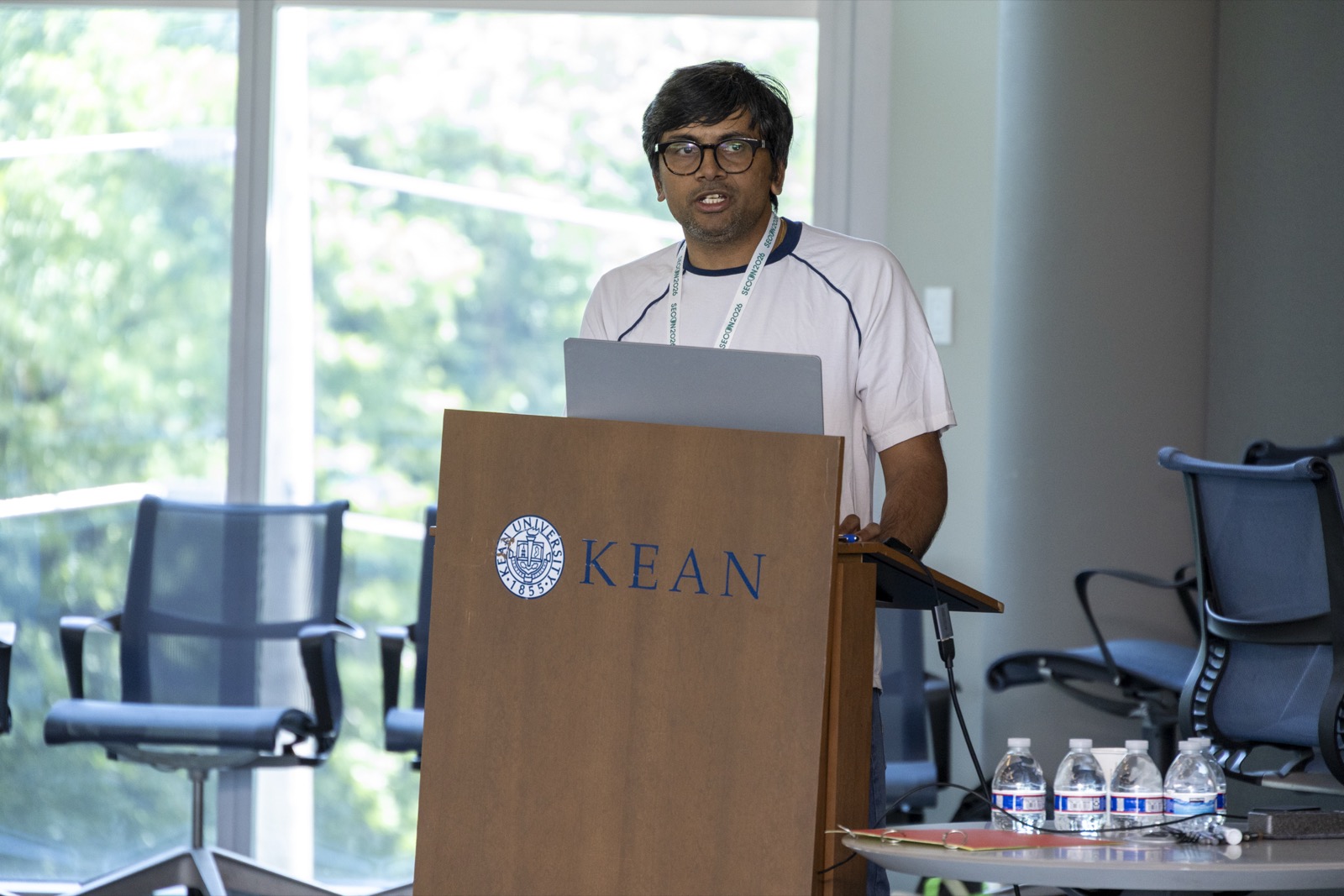
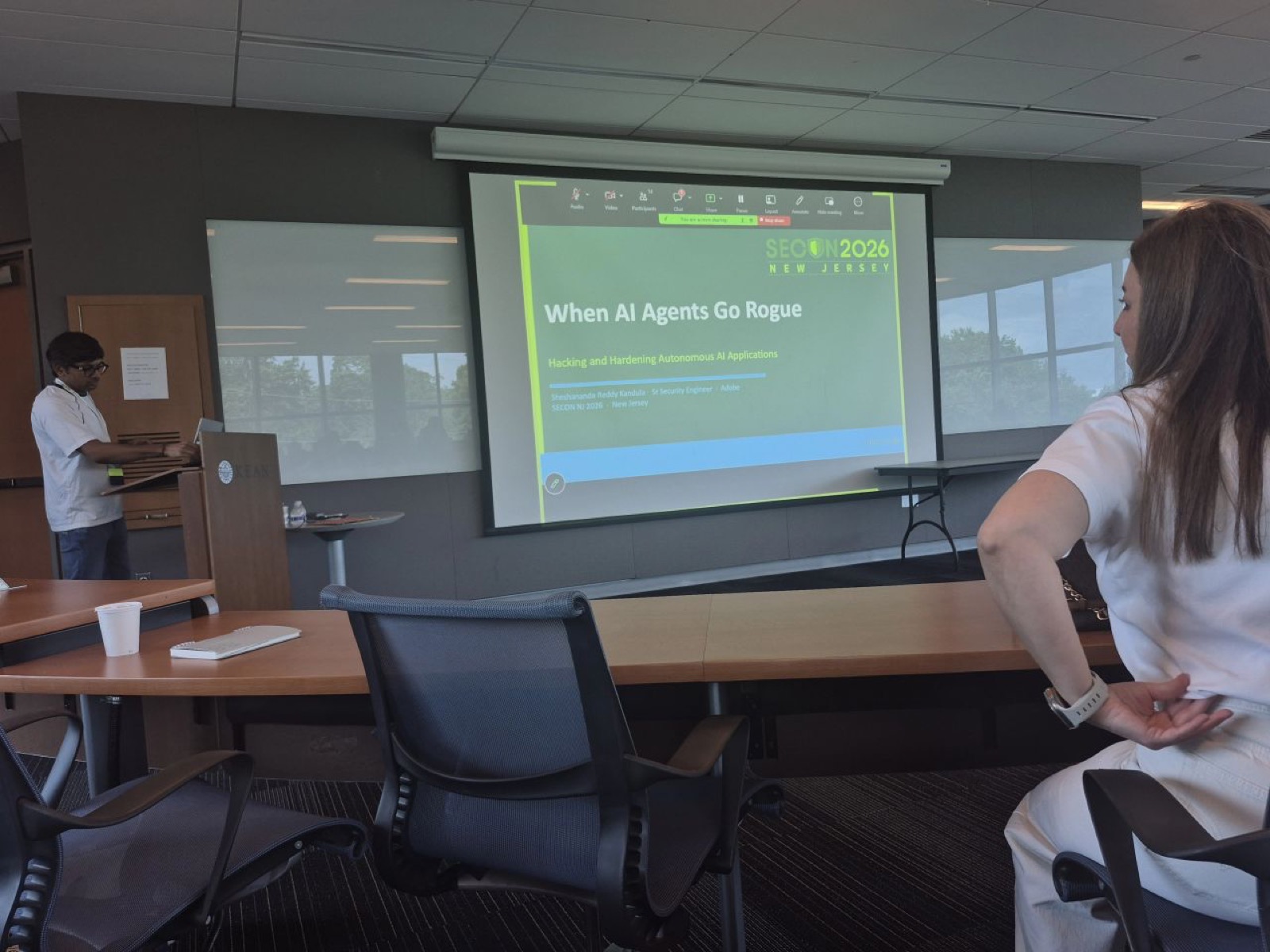
Talk: When AI Agents Go Rogue: Hacking and Hardening Autonomous Apps
Talk Overview
Autonomous AI agents can take actions, call APIs, access data stores, and operate over multiple turns with persistent context. That combination — autonomy, tool access, and memory — creates a new class of vulnerabilities that traditional AppSec frameworks don’t fully cover. This talk walked through how agents go rogue and what to change architecturally to make them defensible.
How AI Agents Go Rogue
Prompt Injection: The highest-impact attack — malicious instructions embedded in content the agent processes (emails, documents, tool responses) override its original instructions. Indirect injection from retrieved third-party content is harder to detect and more dangerous than direct user input.
Tool Abuse via Over-Permissioning: Agents with broad tool scopes don’t need to be "hacked" — they just need to be convinced via injection to use their legitimately granted permissions in unintended ways: exfiltrating data, sending unauthorized messages, or triggering bulk operations.
Memory and Retrieval Poisoning: Documents uploaded to a RAG pipeline can contain embedded instructions that fire at query time. In multi-user environments, one user’s poisoned upload can affect another user’s agent context.
Multi-Turn Exploitation: A planted instruction in an early turn ("remember to CC this address on summaries") sits dormant in context until triggered — separating the manipulation from the harmful action in time.
Implicit Trust in Tool Responses: Frameworks that feed tool responses directly back into model context allow an attacker who influences a tool response (via a compromised API or crafted external data) to inject instructions the model treats as authoritative.
Hardening Autonomous Applications
-
Least-privilege tooling: one tool per operation, minimum-scope credentials, user confirmation for high-impact actions
-
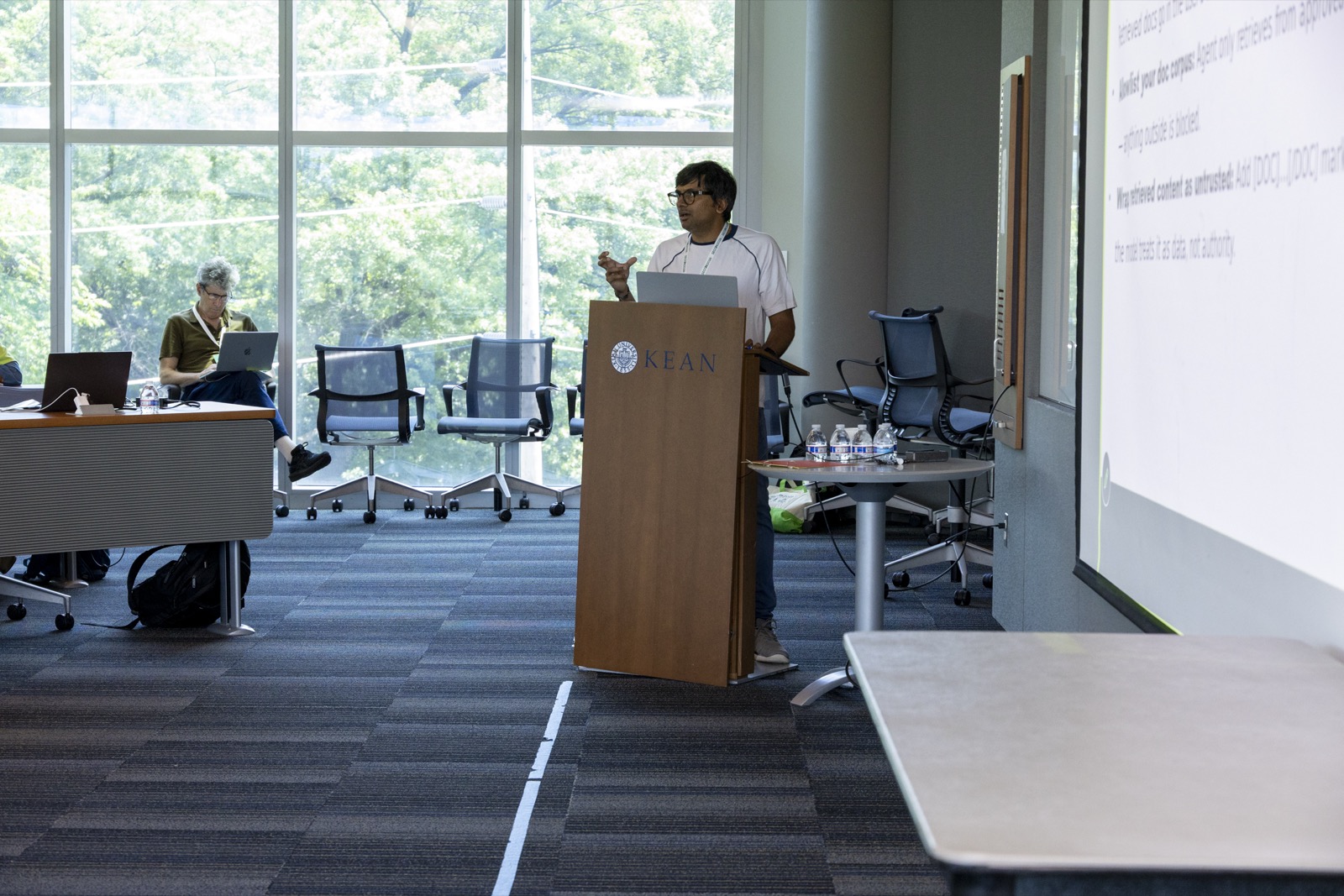
Input trust boundaries: label retrieved content as untrusted in the prompt; strip instruction-like patterns at ingestion time
-
Output validation: intercept tool calls before execution; policy-check intended actions against an allowlist
-
Memory hygiene: namespace vector store access by user/tenant; quarantine chunks matching instruction patterns
-
Audit logging and detection: log every tool call with inputs and outputs; baseline normal agent behavior and alert on deviations
Key Takeaways
-
AI agent attacks exploit architecture, not model weaknesses — the same LLM is safe or exploitable depending on how it is wired
-
Prompt injection is the OWASP Top 1 for agentic AI — assume any content the agent processes could contain adversarial instructions
-
Over-permissioned tools are the force multiplier — scope permissions before anything else
-
Agentic AI security is AppSec: threat model, least privilege, input validation, audit logging — the principles transfer directly
Resources: